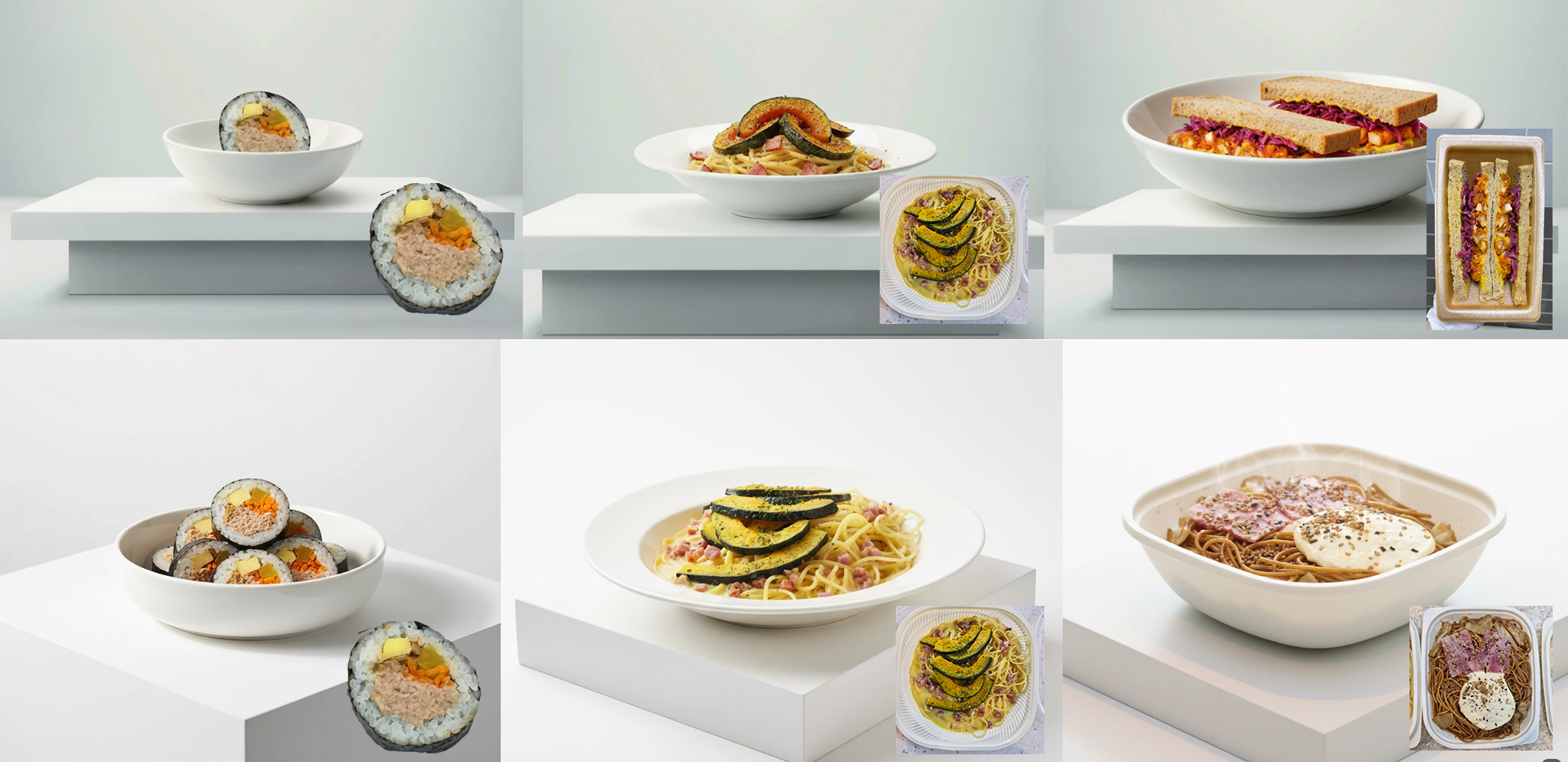
Why It Is Important to Write Consistent Prompts When Using Background References
When using background references in QUEL image generation, the system primarily refers to the mood, color, and spatial composition of the reference image. However, if the prompt text contains background information different from the reference, QUEL attempts to reflect both pieces of information simultaneously, which may result in unexpected styles or compositions. This is not because the system fails to recognize, but rather a natural outcome of trying to respect and combine both the reference image and the prompt text. Therefore, to achieve the most stable and desired results, it is important to write the prompt content consistently with the reference.
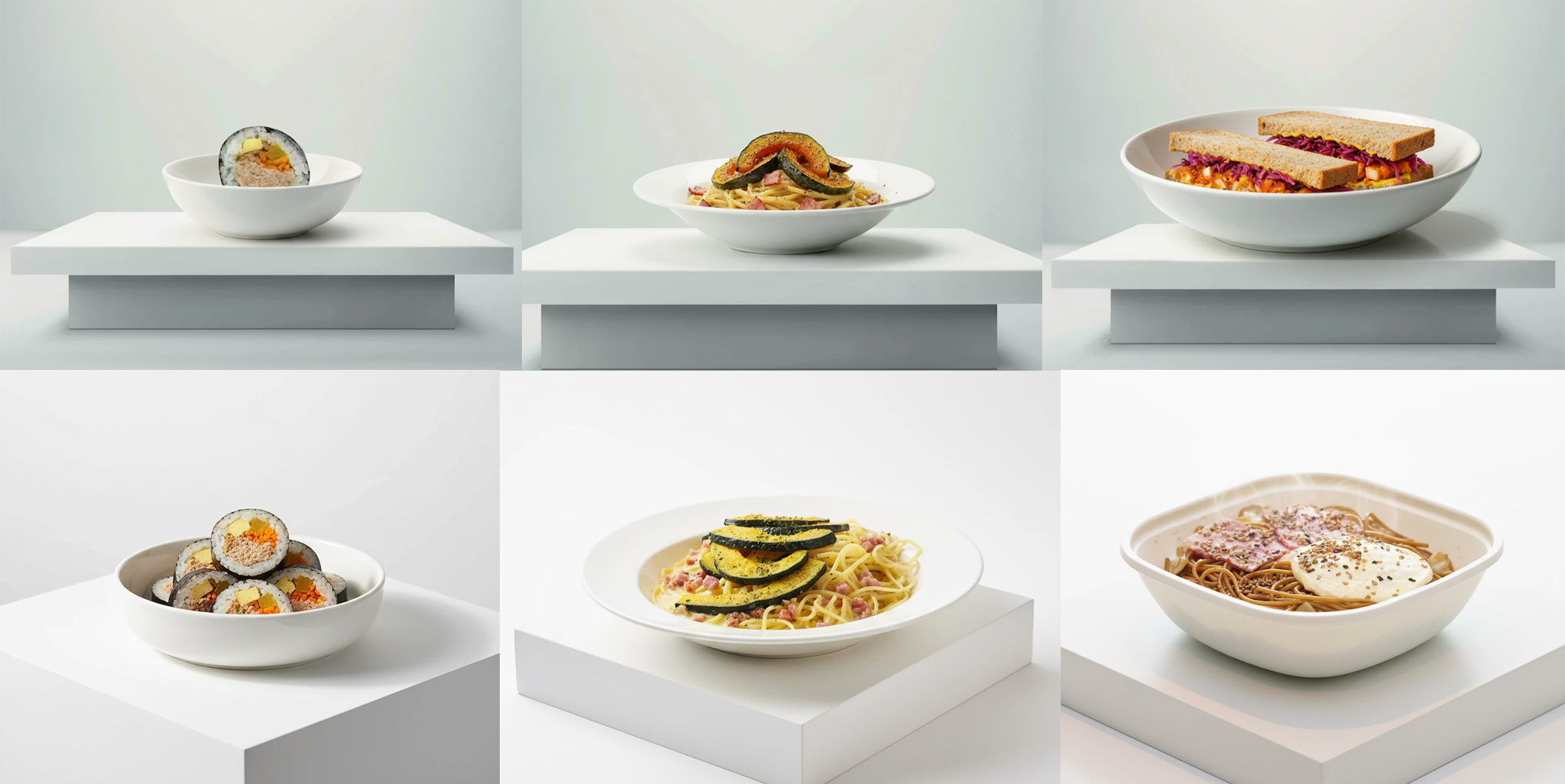
Understanding Conflict Cases with Examples
Example 1
Reference Background: White Studio
Prompt: “Food is placed in a dark mood background”
→ The system attempts to reflect both
White Studio (Reference) + Dark Mood (Prompt)
simultaneously, which may result in an unpredictable background mixing characteristics of both.
Example 2
Reference: Food on a Table
Prompt: “Placed on the floor”
→ Since the reference and text information point in different directions,
it becomes unclear how the image should be composed,
and the result may be altered differently from the reference.
Correct Writing Method: Aligning the Environment of Reference and Prompt
If there are background, spatial, and lighting conditions appearing in the reference,
describing them the same way in the prompt makes it easier to achieve consistent results.
Example Sentence
“in the same clean white studio background as the reference image”
By clearly organizing the prompt to indicate the same environment as the reference,
the system interprets the information more accurately and generates stable results.
Examples of Well-Written Good Prompts
Below is a good example where the background and direction are very clearly defined,
allowing for the generation of high-end images with a unified style even without a reference.
Prompt Example
In a completely pure white studio space,
a clean white round ceramic bowl is placed on a wide and minimal pedestal.
The food is neatly arranged inside the bowl,
creating a minimal atmosphere with only the pedestal, bowl, and food present in the frame without unnecessary props.
A 45-degree soft studio light from the left provides soft and warm highlights on the food and ceramic surface,
while a weak rim light from the rear right cleanly separates the silhouette of the bowl.
Overall, it is directed in a clean and premium high-end food advertisement style,
with the focus precisely adjusted to make the food stand out the most in the pure white background.
High resolution, commercial advertisement shooting feel.
Reasons Why This Prompt Is Good
The space (Studio Setting) is clearly defined
The bowl, lighting, and direction method are consistently defined
A minimal environment without unnecessary elements is accurately expressed
Even if there is a reference image, describing the same conditions
allows for stable result generation without conflict
Summary
QUEL actively utilizes both reference images and prompt text.
If the two contents point in different directions, it may cause confusion in image composition.
Re-explaining the space, lighting, and environment of the reference in the prompt in the same direction
can yield the most stable and predictable results.As shown in the provided examples, prompts written with specific and consistent environments
greatly help maintain high consistency even in reference-based generation.
Usage ) Work consistently using multiple references and a single background reference
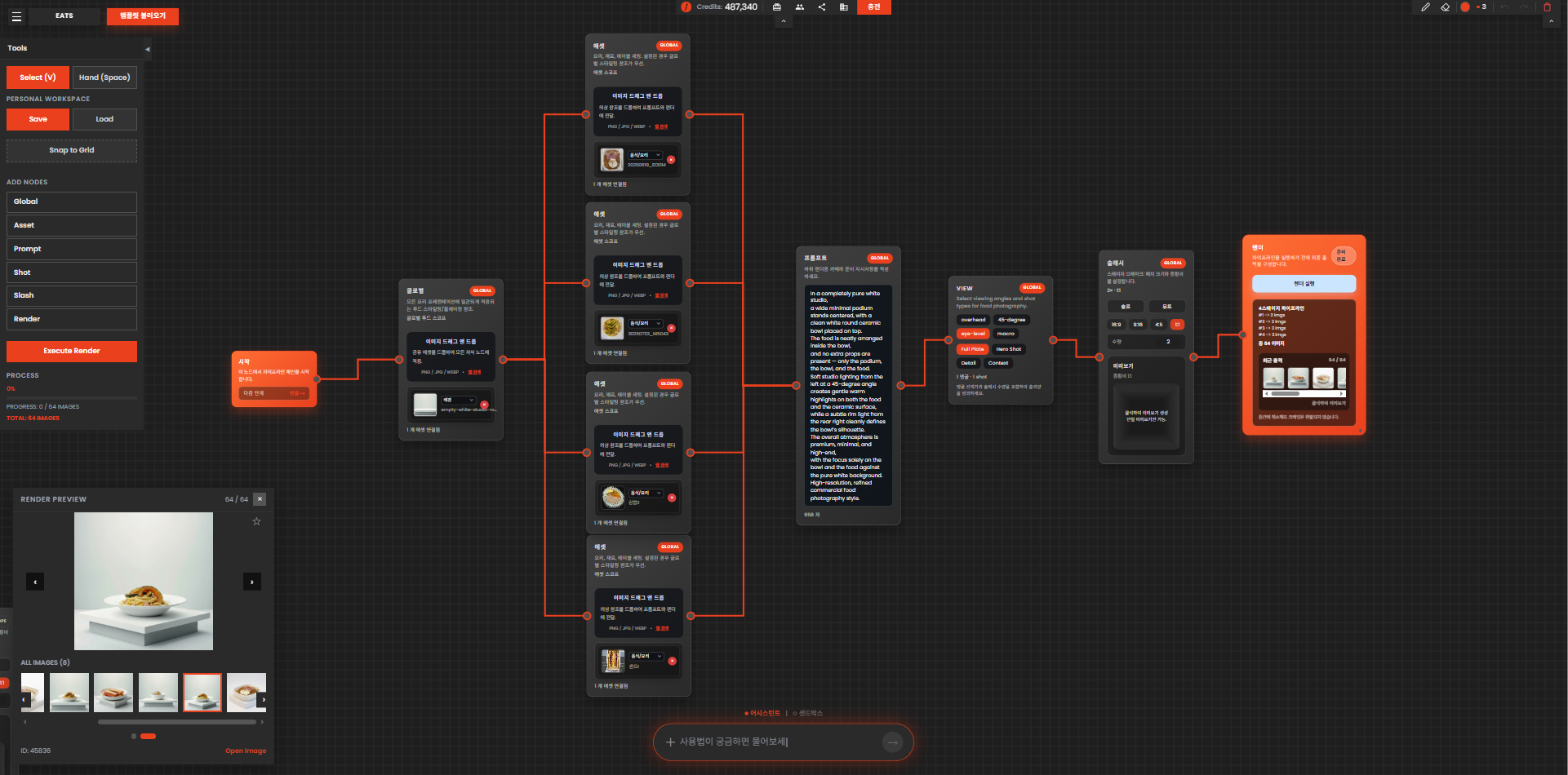
Example Image ) Unified food photo created using background reference